SHEIN & Temu Basket Size After the EU Customs Change
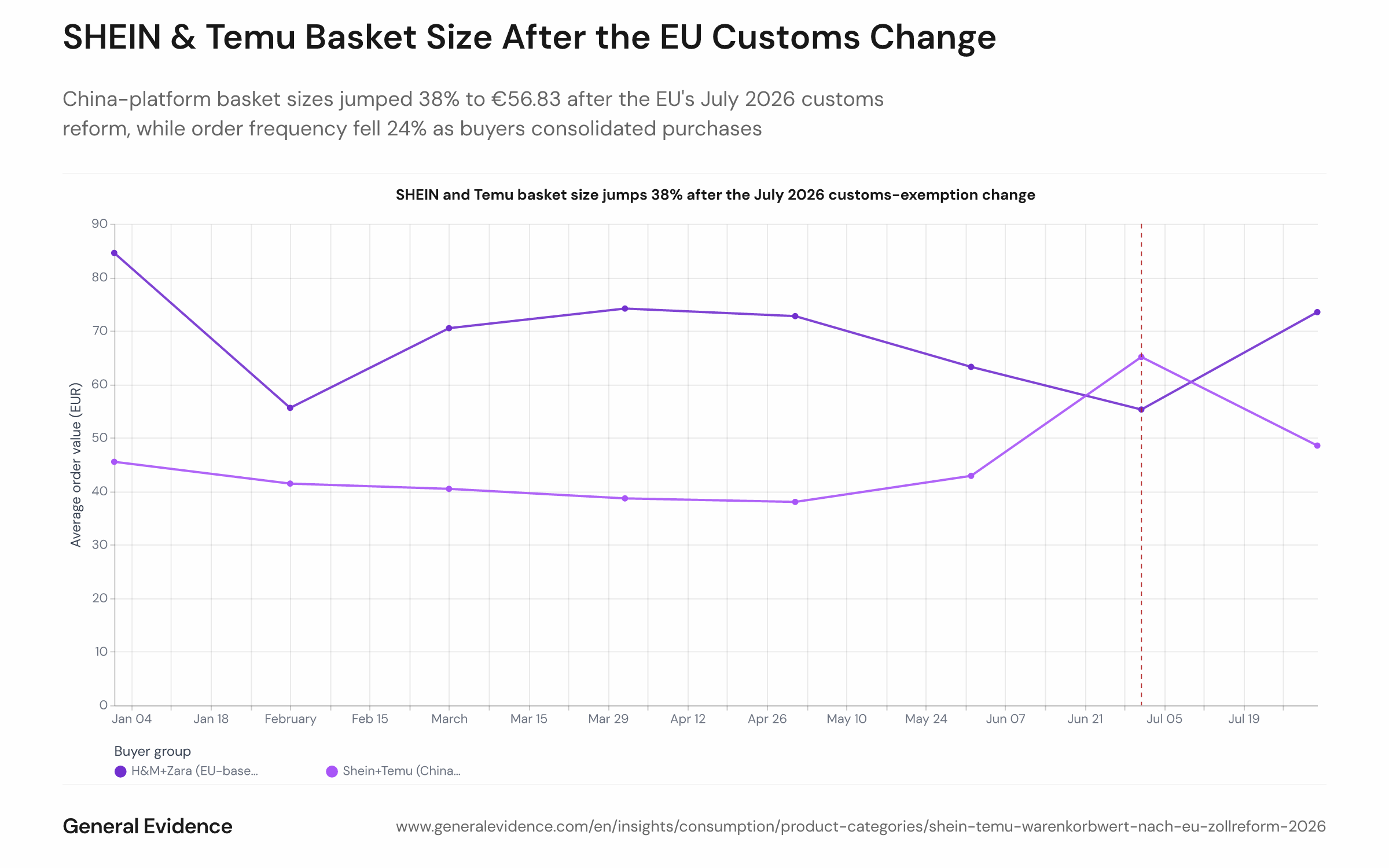
Review Jan–Aug 2026: China-platform basket sizes jumped 38% to €56.83 after the EU's July 2026 customs reform, while order frequency fell 24% as buyers consolidated purchases
Info
- Sample size
- n = 12,466
- Data date
- Jan–Aug 2026
- Segment
- All segments
- Platform
- Purchases
- Market
- Germany
Analysis
The EU's abolition of the €150 duty-free threshold on 1 July 2026 left a clear and immediate footprint in German buyer behavior. Average basket sizes for SHEIN and Temu combined rose 38% to €56.83 in the weeks following the change, while order frequency dropped 24% — a textbook consolidation response to per-shipment cost increases.
After the €150 Zollfreigrenze ends
From 1 July 2026, every parcel from a non-EU seller now carries a €3 duty per item category, replacing the two-decade-old exemption that let sub-€150 packages enter the EU duty-free. Rational shoppers respond by bundling — ordering fewer times but adding more items per basket to spread the fixed cost. The EU-based H&M and Zara control group showed no comparable shift in the same period, confirming the effect is specific to China-direct sourcing. Both SHEIN and Temu had already moved significant inventory into EU warehouses ahead of July — orders fulfilled from EU stock are exempt from the per-item duty — but a material share of China-direct orders persisted, and those buyers adjusted visibly. The €3 interim regime runs until July 2028, when full product-category tariffs replace the flat fee.
This analysis is based on public segment data. For deeper cuts, use our Enterprise interface.
Ask your own question of this data.
This chart is one cut of the panel. In a demo we answer your question on the same data, live.
Methodology
Monthly average order values are calculated from email-confirmed purchases by verified German buyers on SHEIN and Temu (China-direct treatment group) and H&M and Zara (EU-based control group), covering January through August 2026. Pre-period is January–June 2026; post-period is July–August 2026. The difference-in-differences design compares the change in basket size and order frequency between the two groups across the policy cutoff date of 1 July 2026.
These insights are based on the General Evidence Panel. Our data comes exclusively from users who are compensated for their anonymity. Become part of the panel & earn from your data